
Service Dog vs. Therapy Dog vs. Facility Dog vs. Emotional Support Animal
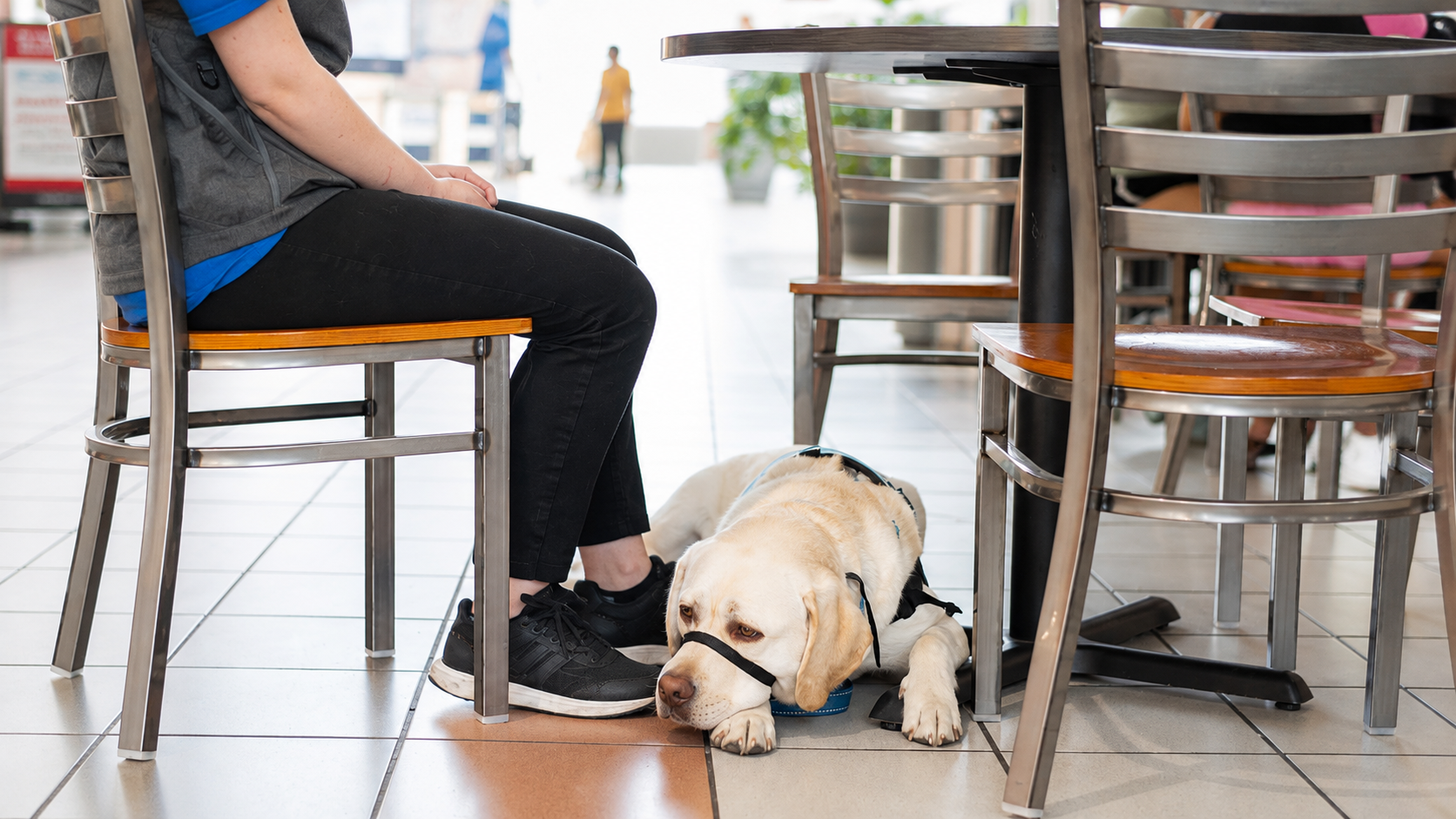
Service dog vs. therapy dog — what’s the difference? While these terms are sometimes used interchangeably, service dogs, therapy dogs, facility dogs and emotional support animals have very different roles, training requirements and access rights. Understanding these differences is especially important in Alberta, where qualified service dog teams have specific protections under the Service Dogs Act.
What Is a Service Dog?
A service dog is specially trained to perform specific tasks or behaviours that help mitigate a person’s disability.
Service dogs may support people with both visible and non-visible disabilities. Depending on the individual’s needs, trained tasks may include retrieving items, assisting with mobility, responding to medical events, interrupting disability-related behaviors, creating space around a handler, or other specifically trained behaviors. Service dogs require much more than task training. They must also be able to behave safely and appropriately in public environments and remain under the control of their handler. In Alberta, qualified service dog teams have protected access to places where the public is normally permitted, including restaurants, stores, hotels, schools, hospitals, public transportation and other public areas. Certain restricted or non-public areas are excluded.
What Makes a Service Dog Different?
A service dog is trained to support a particular person with a disability through specific disability-mitigating tasks. Providing companionship or emotional comfort alone does not make a dog a service dog in Alberta.
What Is a Therapy Dog?
A therapy dog generally visits other people with its handler to provide comfort, affection and positive interaction. You may encounter therapy dogs in environments such as hospitals, schools, seniors’ facilities and community programs. The important distinction is who the dog is there to support.
A service dog primarily works for its handler. A therapy dog is brought by its handler to interact with and provide comfort to other people. Therapy dogs can provide tremendous benefits, but they are not considered service dogs under Alberta’s Service Dogs Act and do not receive the same protected public-access rights as qualified service dog teams.
What Is a Facility Dog?
A facility dog is a specially trained dog that works alongside a trained professional or volunteer in a professional setting. Unlike a therapy dog whose primary role may involve visits and interaction, a facility dog is trained to perform specific skilled tasks or structured interventions with multiple clients.
Facility dogs may work in environments such as:
- Schools
- Hospitals and health-care settings
- Child and youth advocacy centres
- Victim services
- Psychology or counselling practices
- Speech and language programs
- Seniors’ facilities
- Other professional environments
At Summit Service Dogs, our facility dogs are trained to work within organizations where they can support staff and clientele through activities such as participation in therapies, tactile stimulation, retrieval, motivation, anxiety reduction, relationship building and other individualized work.
Facility dogs should not automatically be assumed to have the same general public-access rights as a qualified service dog team. Their access can depend on their role, setting and applicable requirements.
What Is an Emotional Support Animal?
Learn more about Summit Service Dogs Facility Dog Program here
An emotional support animal (ESA) provides comfort and companionship to its owner through its presence.
This can be extremely meaningful to the person who relies on the animal. However, an emotional support animal is different from a service dog because it is not specifically trained to perform tasks that mitigate a person’s disability. The Government of Alberta states that emotional support or comfort dogs are not considered service dogs under Alberta’s Service Dogs Act. As a result, an emotional support animal does not receive the same protected public-access rights as a qualified service dog in Alberta.
What’s the Difference?
| Service Dog | Therapy Dog | Facility Dog | Emotional Support Animal | |
|---|---|---|---|---|
| Primary role | Mitigate a person’s disability | Provide comfort/interaction to others | Skilled work with multiple clients | Comfort and companionship |
| Works primarily with | Individual handler | People visited by handler/dog | Clients within a professional setting | Owner |
| Specific trained work? | Yes | Not disability tasks for its handler | Yes, skilled facility work | Not required |
| Protected service-dog public access in Alberta? | Yes, when qualified | No | No | No |
Why Does the Difference Matter?
The terminology matters because calling every supportive dog a “service dog” creates confusion about training and public-access rights.
Qualified service dogs undergo extensive training and testing because they must be able to safely accompany their handlers into public environments. In Alberta, qualified teams have legal protections allowing them to enter places where the public is normally permitted.
Therapy dogs, facility dogs and emotional support animals can all perform valuable roles, but those roles are different from the work of a service dog. A vest, patch or label does not by itself make a dog a qualified service dog.
Download Our Free Guide
Want to keep this information for future reference?
Download our free Summit Service Dogs guide: Service Dog vs. Therapy Dog vs. Facility Dog vs. Emotional Support Animal
IMPORTANT: This page provides general educational information and is not legal advice. Service-dog legislation, regulations and government policies can change. Refer to current Government of Alberta information when determining your legal rights or obligations.